

Robotic and laparoscopic surgery, also called minimally invasive or keyhole surgery, are techniques that use small incisions rather than a large open cut. Laparoscopic surgery uses long instruments guided by a camera, while robotic surgery uses robot-assisted instruments controlled by the surgeon for additional precision and visualisation.
- GI cancer surgery, including gallbladder, stomach, colorectal and other GI cancers, where suitable
- Gallbladder and other HPB procedures, including difficult gallbladder cases
- Hernia and abdominal wall repair
- Bariatric and metabolic surgery
- Complex abdominal procedures, including selected re-do cases
Choosing between robotic, laparoscopic and open surgery can feel like an added decision on top of an already difficult diagnosis. In practice, the choice is made by the surgeon based on what is safest and most effective for your specific condition, and this is explained clearly before surgery.
The choice between robotic, laparoscopic and open surgery depends on the type, size and location of the condition being treated, the patient's overall health, and whether previous surgery has been performed in the area. Not every condition is suited to a minimally invasive approach.
Full clinical assessment and review of imaging
Consideration of the specific procedure needed and its technical demands
Assessment of the patient's overall fitness for surgery
Discussion with the patient about the options, benefits and limitations of each approach
- Robotic surgery: greater precision, improved visualisation and finer control during delicate or complex procedures, for suitable cases
- Laparoscopic surgery: a well established minimally invasive option for a wide range of GI procedures
- Potential benefits where appropriate: smaller incisions, reduced blood loss, and a shorter hospital stay and recovery compared with open surgery
- Open surgery: still the safest and most appropriate approach for certain complex or high-risk cases
Every patient undergoes an individual assessment to determine which technique is most appropriate for their condition.
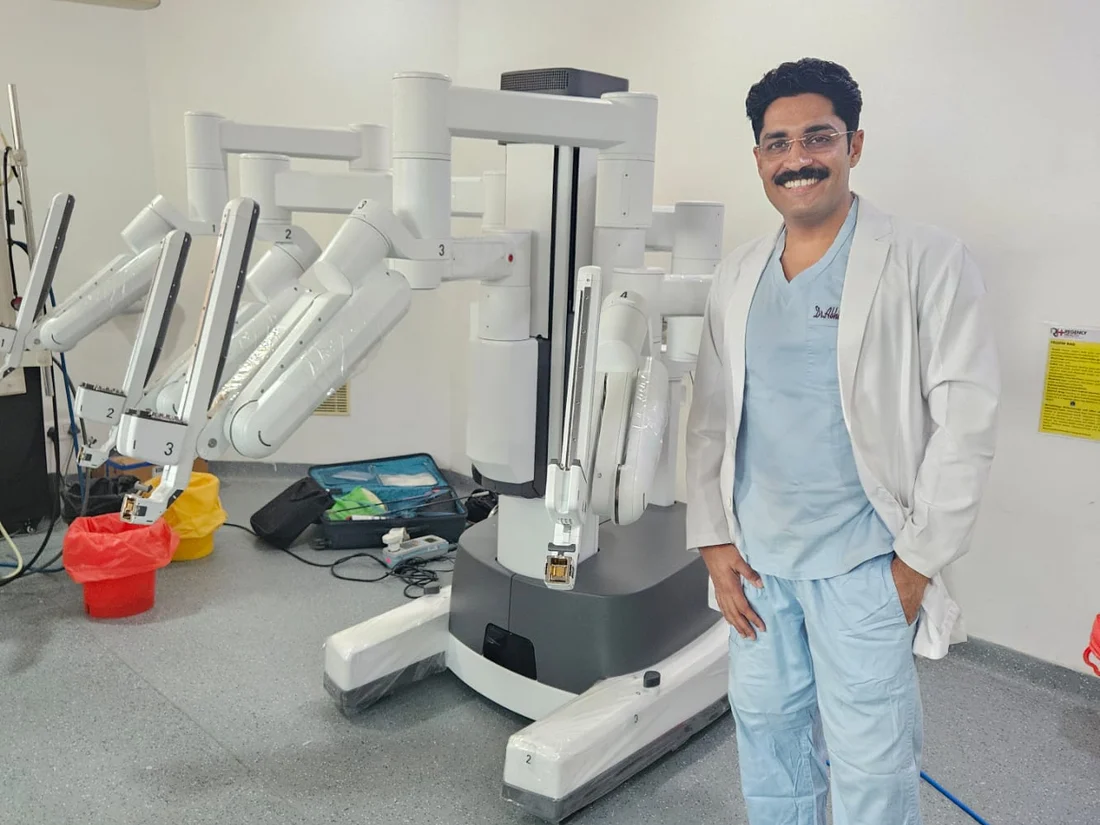
- Over 15 years of experience in Surgical Gastroenterology
- Established Kanpur's first robotic GI surgery programme, part of a wider legacy of surgical firsts in the region
- Fellow of the Association of Minimal Access Surgeons in India (FAMASI)
- Fellowships in Advanced Laparoscopic Surgery across HPB, Hernia and Bariatric surgery
Neither is universally better. Robotic surgery may offer added precision for certain complex procedures, while laparoscopic surgery is a well established option for many others. The right choice depends on the individual case.
No. Suitability depends on the type, stage and location of the condition, along with the patient's overall health. Some cases are better suited to open surgery.
Often yes, though this varies by procedure and individual case, and is discussed as part of your treatment plan.
Yes. Dr. Kapoor established Kanpur's first robotic GI surgery programme and has since carried out robotic procedures across cancer, HPB, bariatric and hernia surgery.
The right technique is the one that suits your condition, not the most advanced one available. Dr. Abhimanyu Kapoor provides robotic and laparoscopic GI surgery in Kanpur across cancer, HPB, hernia and bariatric procedures.