

A hernia, sometimes called a rupture in everyday language, is a gap in the abdominal wall through which tissue pushes out, causing a lump or bulge. Hernia and abdominal wall surgery repairs this gap, and ranges from a routine repair to complex reconstruction for large or recurrent defects.
- A lump or bulge in the abdomen or groin, especially one that grows or is more noticeable when standing or straining
- A hernia that has returned after previous surgery
- Pain or discomfort around a hernia, particularly with lifting or coughing
- A large or complicated abdominal wall defect, including one following previous surgery
- A hernia that has become firm, painful and cannot be pushed back in, which needs urgent assessment
Most hernias are not medical emergencies, but they do not resolve on their own and tend to enlarge gradually over time. A hernia that suddenly becomes painful, firm and cannot be pushed back in needs urgent medical attention, as this can indicate the tissue has become trapped.
Risk factors include heavy lifting, chronic coughing, obesity, previous abdominal surgery, and, for recurrent hernias, the technique used in the original repair. A weaker abdominal wall from age or multiple previous surgeries can also make a hernia more likely to recur.
Clinical examination to confirm the hernia and assess its size
Ultrasound or CT scan, particularly for complex, recurrent or unclear cases
Review of previous operative notes where a hernia has recurred, to understand why the earlier repair did not hold
Planning of the surgical approach based on the size, location and complexity of the defect
- Laparoscopic hernia repair: keyhole repair using mesh, suited to most routine hernias
- Robotic hernia repair: a minimally invasive option for selected complex cases
- Recurrent hernia repair: a more detailed surgical plan addressing why a previous repair failed
- Abdominal wall reconstruction: component separation and other advanced techniques for large or complex abdominal wall defects
Recovery time depends on the size and complexity of the hernia repaired, and is discussed individually before surgery.
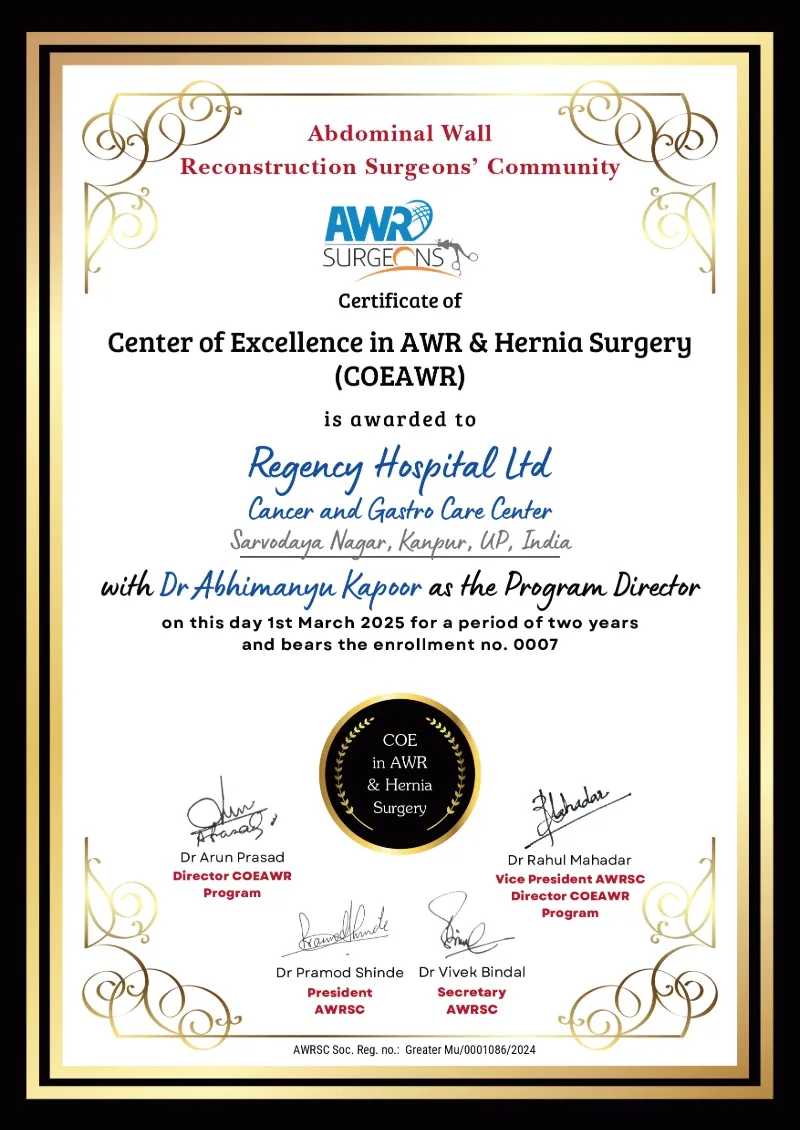
- Over 15 years of experience in Surgical Gastroenterology
- Holds a dedicated Fellowship in Advanced Laparoscopic Surgery (FALS) in Hernia
- Established Uttar Pradesh's first and only Centre for Abdominal Wall Reconstruction
- Focused experience in recurrent and previously failed hernia repairs
- Part of a wider legacy of surgical firsts brought to Kanpur and the surrounding region
Recurrence can happen for several reasons, including the technique used, the type of mesh, or ongoing strain on the abdominal wall. A recurrent hernia is assessed in detail to understand what went wrong before planning the repair.
Both are minimally invasive options. Robotic surgery may offer additional precision for selected complex cases, but the most appropriate technique depends on the individual hernia and patient.
This depends on the type of repair and the physical demands of your work, and is discussed clearly during your consultation.
It is a more advanced surgical technique used for large or complex abdominal wall defects, often involving component separation, to restore the strength and integrity of the abdominal wall.
A hernia, whether new or recurrent, deserves a surgical plan built around why it happened. Dr. Abhimanyu Kapoor provides specialist hernia and abdominal wall reconstruction surgery in Kanpur, including for complex and recurrent cases.