

Laser treatment for piles is a minimally invasive option that most patients are already familiar with, using laser energy to treat the piles tissue without cutting. The Rafaelo procedure, also called radiofrequency ablation for piles, works on a similar principle but uses radiofrequency energy instead of laser to shrink the piles tissue from within. Dr. Kapoor offers both, alongside Stapler Haemorrhoidectomy (MIPH), so the technique can be matched to what suits each patient's case best.
- Piles causing bleeding, discomfort or a lump around the anus
- Piles that have not fully settled with dietary changes or medication
- A preference to avoid conventional cutting surgery for piles
- Wanting a treatment with a typically quicker return to daily activity
Piles are common and very treatable, and the Rafaelo procedure is generally associated with less discomfort than conventional haemorrhoid surgery. It is not suitable for every type or severity of piles, which is why a proper assessment comes first.
Suitability for the Rafaelo procedure depends on the grade and type of piles present. More advanced or complicated piles may still need a different surgical approach, which is assessed during your consultation.
Clinical examination and, where needed, proctoscopy to assess the piles
Grading of the piles to determine whether the Rafaelo procedure is suitable
Discussion of alternative treatments if the Rafaelo procedure is not the best fit
Planning of the procedure, usually carried out as a day case
- Laser Haemorrhoidectomy: a minimally invasive option using laser energy to treat the piles tissue, without cutting
- Rafaelo procedure (radiofrequency delivery): a fine probe delivers radiofrequency energy directly into the piles tissue, working on a similar no-cutting principle to laser treatment
- Stapler Haemorrhoidectomy (MIPH): a minimally invasive stapled technique, offered as a further option for suitable cases
- No cutting involved: with all three options, the piles tissue is treated or shrinks over time rather than being surgically removed
- Day-case procedure: usually completed without an overnight hospital stay
- Return to activity: many patients return to normal, non-strenuous activity within a few days, depending on the individual case and technique used
As with any procedure, individual recovery varies, and this is discussed clearly before treatment.
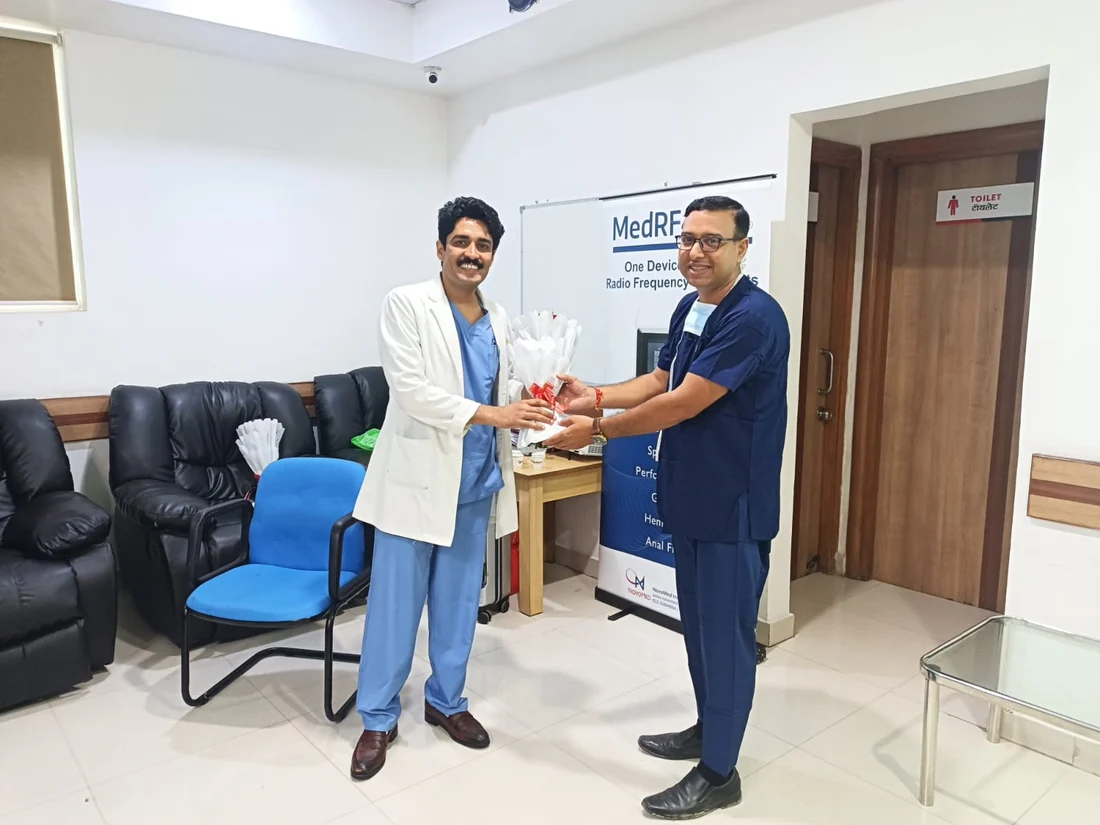
- Over 15 years of experience in Surgical Gastroenterology
- Fellow of the Association of Minimal Access Surgeons in India (FAMASI), supporting a minimally invasive-first approach
- Offers Laser, Rafaelo and MIPH, so the technique can be matched to what suits each patient best
- Part of a legacy of surgical firsts in Kanpur, reflecting a broader commitment to advanced surgical care
Most patients experience less discomfort than with conventional haemorrhoid surgery, though some soreness in the days afterward is normal.
Both are minimally invasive alternatives to conventional surgery. The Rafaelo procedure uses radiofrequency energy specifically, while laser treatment uses a different energy source. Suitability for each is assessed individually.
It tends to suit early to moderate piles best. More advanced piles may need a different surgical approach, which is discussed during your assessment.
Many patients return to non-strenuous activity within a few days, though this depends on the individual and the type of work involved.
If cutting surgery for piles is something you would rather avoid, it is worth finding out whether laser treatment, the Rafaelo procedure, or MIPH is right for you. Dr. Abhimanyu Kapoor offers the Rafaelo procedure in Kanpur as part of a full range of proctology treatment options.