
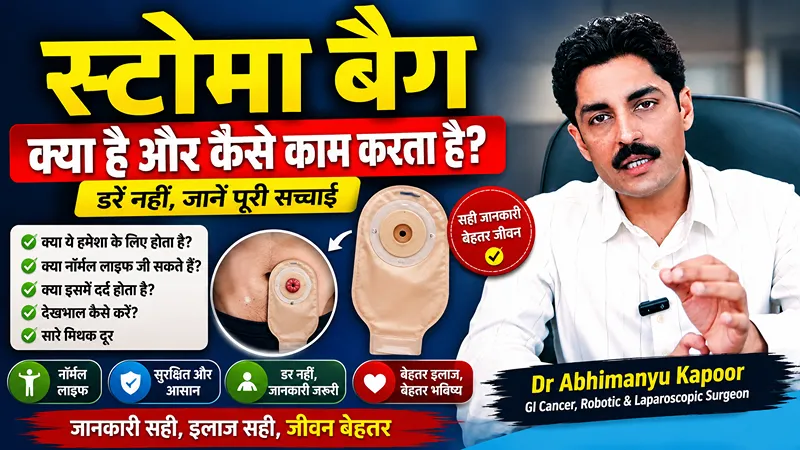
Hearing that you may need a stoma bag after rectal cancer surgery can be overwhelming. Many patients fear that life will never be the same again. Questions like “Can I travel?”, “Can I work?”, “Can I swim?”, or “Will people notice my stoma bag?” are very common.
The truth is that most people with a stoma bag lead completely active, healthy, and independent lives. With modern stoma care products and proper guidance, a colostomy or ileostomy does not stop you from enjoying your daily activities.
In this article, we’ll explain what a stoma is, why it is created, whether it is always permanent, and how you can confidently live a normal life after surgery.
What is a Stoma?
A stoma is a surgically created opening on the abdomen through which the intestine is brought to the skin surface. Instead of passing stool through the anus, waste is collected in a specially designed stoma bag (colostomy bag or ileostomy bag).
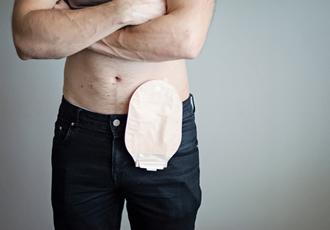
A stoma is created when the lower part of the bowel needs time to heal or when the anal canal cannot be safely preserved due to cancer.
Why is a Stoma Needed?
A stoma may be necessary in patients with:
- Rectal Cancer
- Anal Cancer
- Colon Cancer
- Severe bowel injury
- Inflammatory bowel disease (IBD)
- Emergency bowel obstruction
- Complex colorectal surgery
In cancer surgery, the goal is always to remove the tumor completely while ensuring the patient’s long-term survival.
Is a Stoma Always Permanent?
No.
This is one of the biggest misconceptions.
There are two types of stomas:
1. Temporary Stoma
A temporary stoma is created to allow the bowel to heal after surgery.
Once healing is complete, another minor surgery reconnects the intestine, and the stoma is closed.
Examples include:
- Temporary Colostomy
- Temporary Ileostomy
Many rectal cancer patients receive only a temporary stoma.
2. Permanent Stoma
A permanent stoma is required only when:
- The cancer involves the anal sphincter muscles.
- The anus cannot be safely preserved.
- Removing the tumor completely requires removal of the anal canal.
Although permanent, patients adapt remarkably well and continue living active lives.
The Biggest Myth About Stoma Bags
Many people believe:
“If I get a stoma bag, my life is over.”
This is completely false.
Today, thousands of people with stoma bags:
- Work full-time
- Drive
- Travel internationally
- Exercise regularly
- Attend weddings and social events
- Swim
- Wear normal clothes
- Live happy family lives
Modern stoma bags are lightweight, discreet, odor-proof, and highly reliable.
What Happens if You Delay Surgery Due to Fear?
Some patients postpone life-saving surgery because they fear getting a stoma bag.
Unfortunately, delaying treatment can cause:
- Tumor growth
- Severe pain
- Bleeding
- Infection
- Complete bowel obstruction
- Emergency surgery
- Worse outcomes
In many cases, delaying surgery increases the chances of needing a permanent stoma.
Early treatment often provides better options and better results.
Can Other People See Your Stoma Bag?
In most cases, No.
Modern stoma bags are designed to remain hidden under normal clothing.
Whether you wear:
- Jeans
- Formal trousers
- Saree
- Kurta-Pajama
- Business attire
Most people will never know you have a stoma unless you choose to tell them.
Can You Live Normally with a Stoma Bag?
Absolutely.
Patients with a stoma can comfortably:
- Walk
- Drive
- Work
- Travel
- Exercise
- Climb stairs
- Attend social gatherings
- Sleep normally
- Bathe daily
- Swim
- Enjoy family life
The stoma itself does not prevent an active lifestyle.
Does Stool Continuously Flow into the Bag?
Another common myth is that the bag fills continuously throughout the day.
In reality, bowel movements generally occur in a natural pattern, similar to normal digestion. The bag is emptied when needed and replaced according to your healthcare provider’s instructions.
Is Living with a Stoma Difficult?
Most patients adapt surprisingly quickly.
Within a few weeks, they learn:
- How to empty the bag
- How to change the appliance
- Which foods suit them
- How to manage travel
- Daily hygiene
- Skin care around the stoma
With proper education, caring for a stoma becomes part of the normal daily routine.
Tips for Living Comfortably with a Stoma
- Follow your surgeon’s advice.
- Use high-quality stoma appliances.
- Keep the skin around the stoma clean and dry.
- Stay hydrated.
- Gradually return to physical activities.
- Attend follow-up appointments regularly.
- Seek support from a stoma care nurse if needed.
Frequently Asked Questions (FAQs)
Is a stoma bag painful?
No. The stoma itself has no pain receptors. After recovery from surgery, patients usually experience little or no discomfort related to the stoma.
Can I travel with a stoma?
Yes. Many people with stomas travel by car, train, and airplane without any issues.
Can I exercise?
Yes. Walking, yoga, cycling, gym workouts, and even swimming are possible after your surgeon clears you for activity.
Can a temporary stoma be reversed?
Yes. In many patients, temporary colostomies and ileostomies are successfully reversed after the bowel has healed.
A stoma bag should never become a reason to delay life-saving cancer treatment.
Whether temporary or permanent, modern stoma care allows patients to live active, productive, and fulfilling lives. The focus should always remain on treating cancer early, protecting your health, and returning to normal life with confidence.
If you have been advised to undergo rectal cancer or colorectal surgery, consult an experienced GI Cancer Surgeon to understand your treatment options and receive personalized guidance.