
Esophagus cancer, often called cancer of the food pipe, is becoming increasingly common in India. It usually begins silently and shows symptoms only when the disease has already progressed. Early recognition and timely treatment can significantly improve patient outcomes.
As a Gastrointestinal & GI Onco Surgeon, I frequently meet patients who reach us late because their initial symptoms were misunderstood as simple acidity or routine digestive problems. This guide aims to provide a clear, patient-friendly, and comprehensive overview for patients, caregivers, and referring physicians.
What Is Esophagus Cancer?
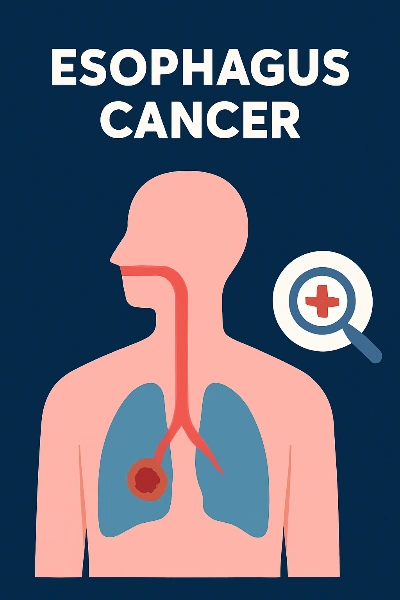
The esophagus is the muscular tube that transports food from the throat to the stomach.
Esophagus cancer occurs when abnormal cells grow uncontrollably in the lining of the food pipe and form a tumor.
Types of Esophagus Cancer
1. Squamous Cell Carcinoma
-
Occurs in the upper or middle portion of the esophagus
-
Strongly associated with smoking, tobacco, and alcohol
2. Adenocarcinoma
-
Affects the lower portion of the esophagus
-
Commonly linked to chronic acidity and Barrett’s esophagus
Both types require a well-planned, multidisciplinary treatment approach.
Why Is Esophagus Cancer Increasing?
A combination of lifestyle and health issues has led to a rise in cases:
-
Chronic acidity (GERD)
-
Increased obesity
-
Higher incidence of Barrett’s esophagus
-
Tobacco and alcohol use
-
Low-fibre diets and very hot beverages
-
Nutritional deficiencies
-
Delayed evaluation of swallowing issues
Most patients ignore early symptoms, leading to late-stage diagnosis.
Early Symptoms of Esophagus Cancer
The earliest and most important symptom is difficulty swallowing (dysphagia)—often ignored by patients.
Common Symptoms
-
Difficulty swallowing solid food
-
Sensation of food getting “stuck” in the chest
-
Gradual progression to trouble swallowing semi-solid or liquid food
-
Unexplained weight loss
-
Persistent acidity or heartburn
-
Chest discomfort not related to the heart
-
Vomiting or regurgitation
Red Flag:
If swallowing liquids becomes difficult, it is a medical emergency and requires immediate evaluation.
How Is Esophagus Cancer Diagnosed?
Diagnosis involves a structured approach to determine the type, stage, and spread of the disease.
1. Endoscopy
The first and most essential test.
Allows direct visualization of the esophagus and collection of biopsy samples.
2. Biopsy
Confirms cancer and identifies the type of tumor.
3. Staging Investigations
Used to plan the optimal treatment:
-
CT scan or PET-CT scan
-
Endoscopic Ultrasound (EUS) in select cases
-
Blood tests and nutritional assessment
Accurate staging helps determine whether to begin with chemoradiation or proceed directly to surgery.
Treatment Options for Esophagus Cancer
Treatment depends on the stage, tumor location, and overall fitness of the patient.
1. Neoadjuvant Chemoradiation
Most patients begin with a combination of:
-
Chemotherapy + Radiation Therapy (CRT)
This helps shrink the tumor and increases the chances of successful surgery.
2. Surgery – Minimally Invasive & Robotic Esophagectomy
Surgery is the cornerstone of curative treatment.
Modern techniques include:
-
Laparoscopic (Minimally Invasive) Esophagectomy
-
Robotic Esophagectomy
Benefits of Robotic Surgery
-
Greater precision and control
-
Better lymph node clearance
-
Less blood loss
-
Reduced pain, faster recovery
-
Lower overall complication rates
3. Endoscopic Therapy for Early Cancer
For early-stage cancers:
-
EMR (Endoscopic Mucosal Resection)
-
ESD (Endoscopic Submucosal Dissection)
These techniques can remove early tumors without major surgery.
When Is Stenting Needed?
An esophageal stent is used to keep the food pipe open and relieve obstruction.
Indications
-
Severe difficulty swallowing (especially liquids)
-
Patients undergoing palliative treatment
-
Select patients needing temporary relief during neoadjuvant therapy
Stenting requires careful planning, especially when surgery is expected later.
Survival Rates & Long-Term Outcomes
Survival depends on several factors:
-
Stage at diagnosis
-
Response to chemoradiation
-
Quality of surgical technique
-
Nutritional status
-
Overall medical fitness
With advancements in multimodality treatment and robotic surgery, outcomes have improved significantly. Many patients return to regular life with good long-term survival.
Key Message for Patients
-
Difficulty swallowing is never normal.
-
Early diagnosis dramatically improves treatment success.
-
Endoscopy is simple, minimally uncomfortable, and often life-saving.
-
Today, esophagus cancer is highly treatable with chemoradiation and minimally invasive/robotic surgery.
-
Choosing a center with a dedicated GI oncology and robotic surgery team ensures safer and better results.
About the Author
Dr. Abhimanyu Kapoor
Surgical Gastroenterologist & GI Onco Surgeon
Robotic, Laparoscopic & Open GI Surgeries
Regency Hospital & Onyx Clinic, Kanpur
Dr. Kapoor specializes in advanced gastrointestinal and oncological surgeries, including robotic esophagectomy, gastrectomy, pancreatic surgeries, colorectal cancer treatment, and complex abdominal wall reconstructions.