
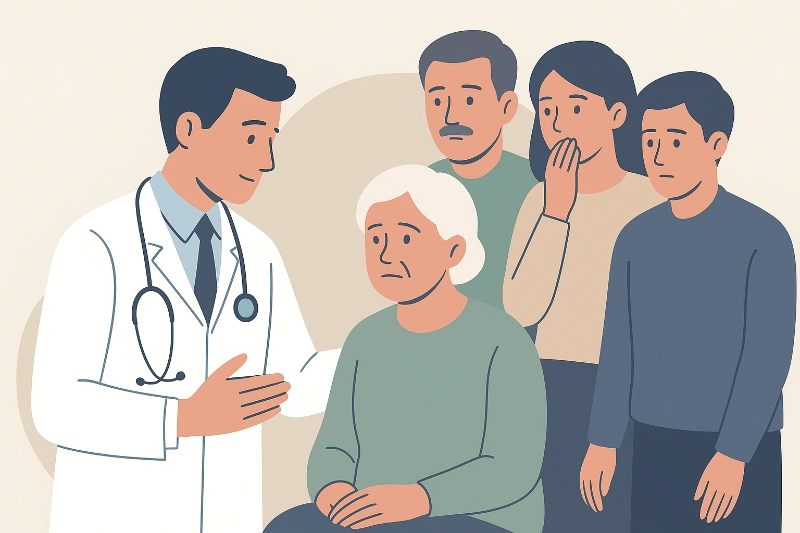
Many Indian families ask doctors to hide cancer diagnosis from patients in hopes of protecting them. This blog explores ethical, cultural and compassionate ways doctors can handle cancer disclosure in India while respecting family emotions and patient autonomy.
One of the most emotionally difficult requests doctors in India often hear is:
“Doctor, please don’t tell my mother about her cancer.”
The plea usually comes from a place of deep love, fear, guilt and protection. Families feel they are shielding their loved one from emotional pain or shock. Yet this places doctors at the intersection of medical ethics, cultural expectations, legal boundaries and human emotions.
This dilemma extends beyond oncology; however, the word “cancer” carries unique fear in Indian households. In this blog, we explore a humane and balanced approach for doctors when faced with this sensitive request.
Why Do Families Ask Doctors to Hide a Cancer Diagnosis?
In many Indian families, medical decisions are deeply collective. Information often flows through relatives first. Families commonly fear:
✔ Patient will lose hope or give up on treatment
✔ Disclosure will worsen their physical or mental condition
✔ Diagnosis will emotionally break the patient
✔ Elderly patients cannot handle the truth
✔ Patient has fragile health or existing depression
✔ Avoiding difficult decisions about treatment choices
While intentions may be protective, patient autonomy should not be overshadowed by emotional fears.
The Ethical Framework: What Should Doctors Do?
Global medical ethics stands on four principles:
🔹 Autonomy – The patient has the right to know and choose
🔹 Beneficence – Act in the patient’s best interest
🔹 Non-maleficence – Do no harm
🔹 Justice – Equal treatment for every patient
In India, the law supports patient autonomy unless the patient has given explicit consent allowing family-only disclosure. So, ethically and legally, the doctor’s duty is primarily toward the patient.
Cultural Reality: Why Doctors Can’t Ignore Context
India is a family-centric culture, especially in health situations. Many patients themselves may:
-
Prefer not to know details
-
Delegate decisions to their children or spouse
-
Believe knowing the full truth will only add stress
Therefore, doctors should avoid rigid rules. A patient-centered approach that respects culture is essential.
A Balanced and Human Approach for Doctors
Here is a practical, compassionate pathway for cancer disclosure in India:
1. Explore the Family’s Fear
Ask:
“What concerns you the most about telling her?”
Understanding their fear allows doctors to address misconceptions and reduce anxiety.
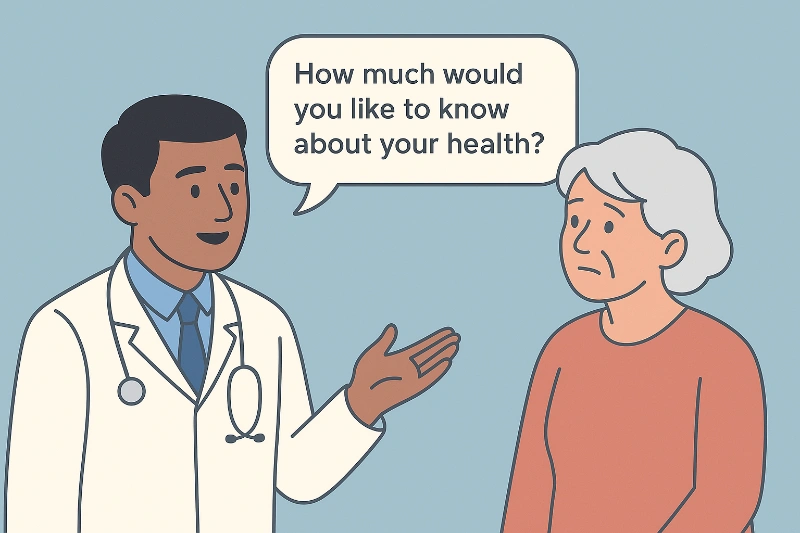
2. Assess the Patient’s Preferences Early
Before diagnosis, gently ask:
“How much would you like to know about your health?”
Their answer becomes the ethical roadmap.
3. Respect the Patient’s Right to Know
If the patient has not opted for non-disclosure, it is the doctor’s responsibility to inform them. However, disclosure can be gradual and sensitive.
4. Share the Diagnosis with Compassion, Not Bluntness
Cancer communication is an art. Tone, body language, setting and words matter. Truth should never be rushed or harsh.
5. Offer Families a Middle Path
Doctors can assure them:
“I will explain gently and focus on treatment and hope. But if your mother asks directly, I cannot hide the truth.”
This reduces fear and builds trust.
6. Prepare for Shared Decision-Making
Once informed, many families are surprised at the patient’s strength. Studies show that uncertainty causes more distress than truth.
7. Consider Rare Exceptions
Hiding the diagnosis may be justified in cases of:
-
Severe psychiatric illness
-
Terminal illness when the patient explicitly prefers not to know
These exceptions should be documented and handled cautiously.
Perspectives That Should Be Respected
🔸 The Family
They are trying to protect someone they love. Their fear is genuine, not malicious.
🔸 The Patient
Patients often sense something is wrong. Lack of clarity causes anxiety. Honesty restores dignity and control.
🔸 The Doctor
Doctors must balance law, ethics, empathy, culture and emotional labor, often under intense pressure.
🔸 The Moral View
Truth is not just information. It is respect for the patient as a human being.
But truth should be delivered with kindness, timing and compassion.
The Goal: Truth With Compassion
Cancer disclosure is not about blunt honesty. It is about ensuring that the patient:
-
Feels respected
-
Is never abandoned
-
Has hope alongside truth
-
Makes informed decisions with their family
When doctors combine truth, empathy and cultural sensitivity, families become collaborators—not obstacles.
Most families who say, “Doctor, please don’t tell my mother about her cancer,” are driven by fear, not secrecy.
A doctor’s role is to:
✨ Transform fear into understanding
✨ Support families emotionally
✨ Uphold the patient’s right to know
✨ Communicate with empathy and dignity
Every case is different, but the principle remains universal: