
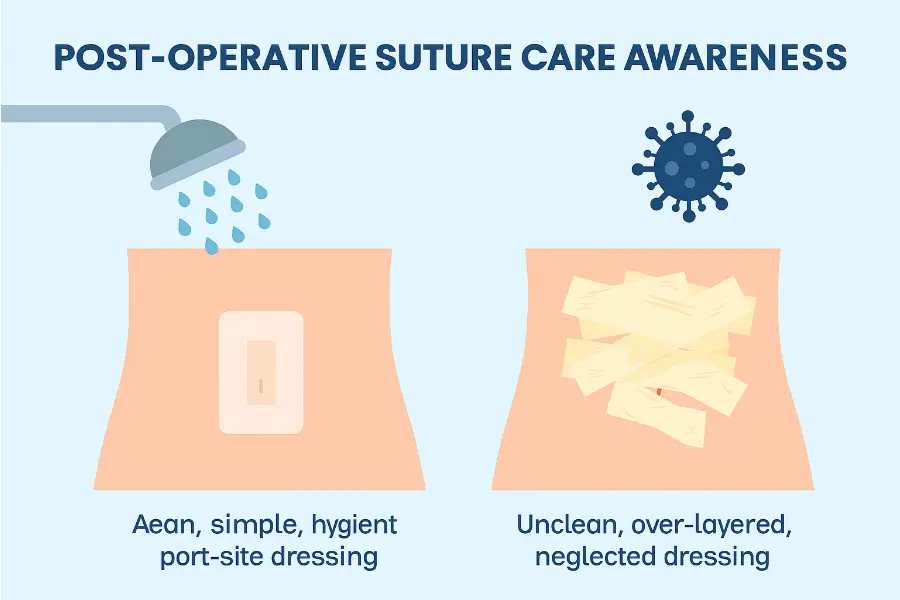
Recovering from surgery is a delicate journey. Whether you’ve undergone laparoscopic surgery or an open procedure, one of the most important aspects of healing is post-operative suture care. Unfortunately, many patients carry misconceptions about how to protect their stitches, often leading to practices that increase the risk of infection rather than prevent it.
This blog aims to raise awareness about proper suture care, debunk myths, and provide practical guidance for patients and caregivers. By the end, you’ll understand why clean water is not your enemy—but poor hygiene is.
Why Post-Operative Suture Care Matters
- Healing depends on hygiene: Surgical wounds are vulnerable to infection. Proper care ensures faster recovery and reduces complications.
- Neglect can delay recovery: Over-layered, unchanged dressings trap moisture and bacteria, creating a breeding ground for infection.
- Confidence for patients: Knowing the right steps helps reduce anxiety and empowers patients to take charge of their recovery.
Visual Awareness: Clean vs. Neglected Dressings
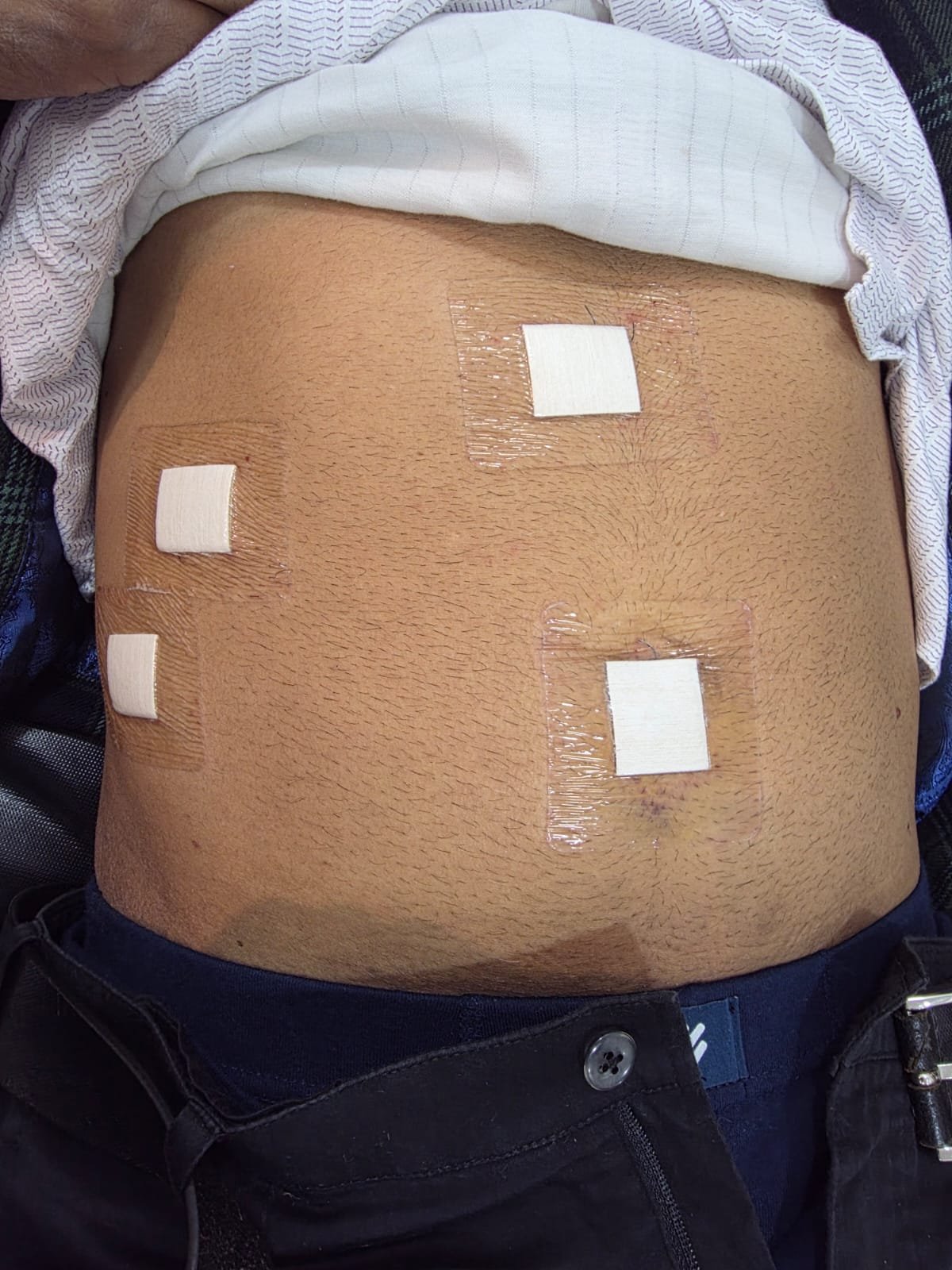
- Image 1: A clean, simple, hygienic port-site dressing. This is the gold standard—minimal, breathable, and changed regularly.
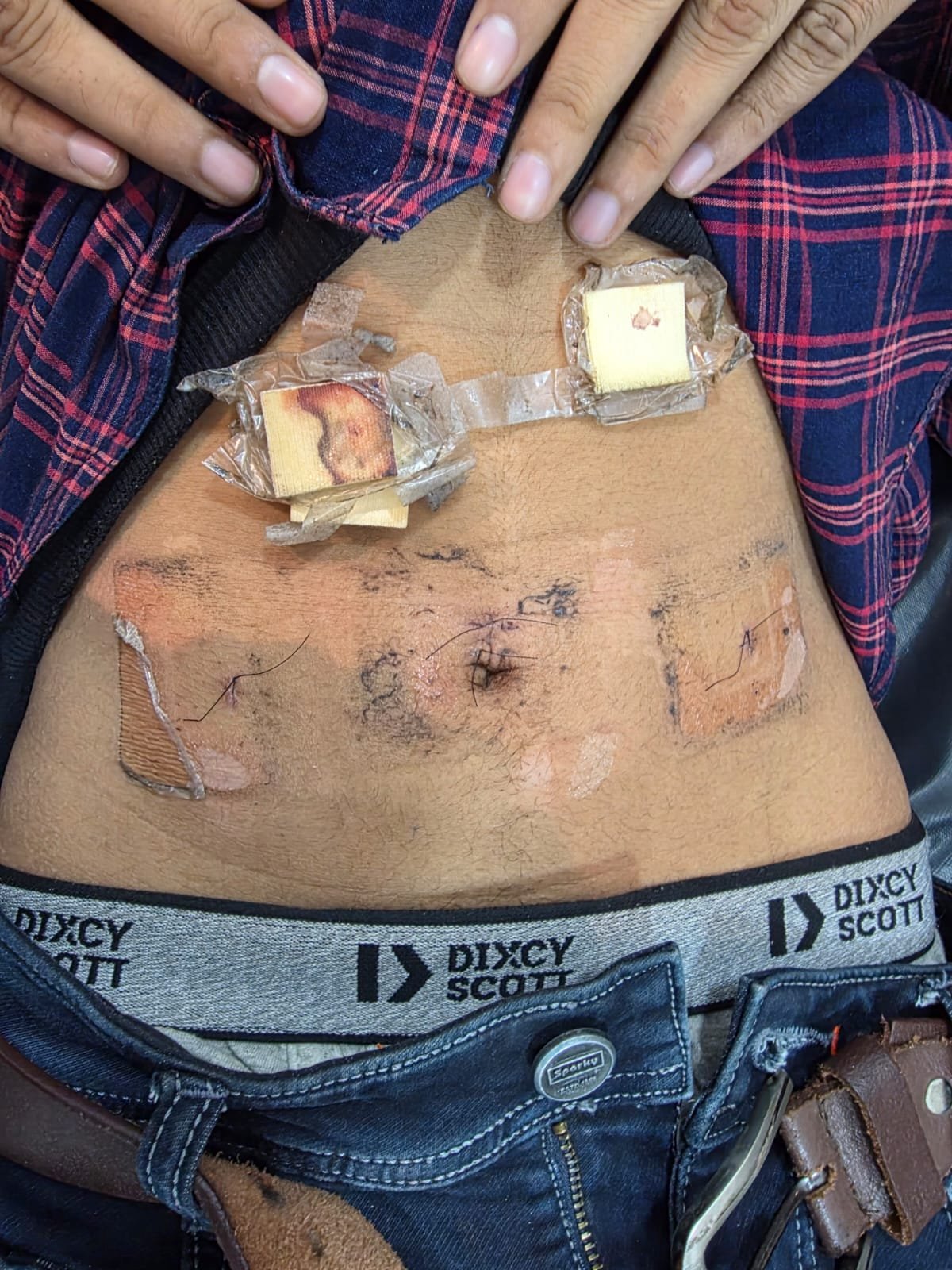
- Image 2: An unclean, over-layered, neglected dressing. Multiple tapes, cling film, and old gauze increase infection risk.
These contrasting visuals highlight the difference between safe and unsafe practices. Remember: simplicity and cleanliness are key.
Myth vs. Reality: Bathing After Surgery
One of the most common fears patients have is: “If I bathe, water will spoil my stitches.”
Reality check:
- Clean water does not harm sutures.
- Dirty, unchanged dressings do.
When patients avoid bathing, sweat, dust, and bacteria accumulate around the wound. To compensate, they often apply multiple layers of dressing, cling film, or tape. This suffocates the wound, traps moisture, and increases infection risk.
Key takeaway: Bathing as advised by your surgeon is safe. What matters is drying the area properly and keeping the dressing clean afterward.
Essential Post-Operative Suture Care Guidelines
Here are the golden rules for patients recovering from laparoscopic or open surgery:
- Bathe regularly as advised: Follow your surgeon’s instructions. Gentle bathing keeps the skin clean and reduces bacterial load.
- Keep the area clean and dry after bathing: Pat dry with a clean towel. Avoid rubbing the wound.
- Change dressings as instructed: Frequency depends on the type of surgery and wound condition. Always use sterile materials.
- Do not add extra layers of tape or bandages: More layers do not mean more protection. They trap bacteria and moisture.
- Report warning signs immediately: Redness, discharge, foul smell, or pain may indicate infection. Seek medical advice promptly.
Understanding the Risk of Infection
Neglected wounds can lead to:
- Superficial infection: Redness, swelling, mild discharge.
- Deep infection: Severe pain, pus formation, fever.
- Delayed healing: Prolonged recovery time and risk of complications.
By maintaining proper hygiene, patients can avoid these risks and ensure smoother healing.
Practical Tips for Patients and Caregivers
- Use mild soap and clean water: Avoid harsh chemicals or antiseptics unless prescribed.
- Wear loose, breathable clothing: It prevents friction and allows air circulation.
- Avoid scratching or touching stitches unnecessarily: Hands carry bacteria.
- Follow up with your surgeon: Regular check-ups ensure the wound is healing properly.
- Stay hydrated and eat nutritious food: Good nutrition supports tissue repair.
Psychological Aspect: Overcoming Fear
Fear of bathing or touching the wound is natural. Patients often feel vulnerable after surgery. However, awareness and education help overcome these fears.
- Trust your surgeon’s advice.
- Remember: cleanliness promotes healing.
- Do not fear water—fear poor hygiene.
Common Mistakes Patients Make
- Avoiding bathing completely → Leads to sweat and bacterial buildup.
- Applying multiple layers of dressing → Creates a moist, unhygienic environment.
- Ignoring signs of infection → Delays treatment and worsens outcomes.
- Using non-sterile materials → Cotton cloth or household tape is unsafe.
- Skipping follow-up appointments → Misses early detection of complications.
Role of Caregivers
Caregivers play a crucial role in ensuring proper suture care:
- Remind patients to bathe and change dressings.
- Observe the wound daily for changes.
- Provide emotional support to reduce fear.
- Ensure sterile materials are available.
- Communicate with healthcare providers when needed.
Doctor’s Advice: Dr. Abhimanyu Kapoor
Dr. Abhimanyu Kapoor emphasizes:
“A clean wound heals better and faster. Do not fear water. Fear poor hygiene.”
This simple yet powerful message captures the essence of post-operative care. Patients should focus on maintaining cleanliness rather than overprotecting the wound with unnecessary layers.
Long-Term Benefits of Proper Suture Care
- Faster healing
- Reduced hospital visits
- Lower risk of complications
- Improved patient confidence
- Better overall recovery experience
Key Takeaways
- Clean water is safe for sutures.
- Dirty, unchanged dressings increase infection risk.
- Bathing, drying, and changing dressings as advised are essential.
- Avoid over-layering with tape or bandages.
- Report any signs of infection immediately.
Post-operative suture care is not about fear—it’s about awareness. Patients must understand that hygiene, not overprotection, ensures healing. By following simple guidelines, trusting medical advice, and avoiding common mistakes, recovery becomes smoother and safer.
Remember:
- Do not fear water.
- Fear poor hygiene.
With proper care, your stitches will heal faster, your recovery will be more comfortable, and your confidence will grow.